Square and rectangular stone planters: all about the stone trough
A rectangular natural stone trough is a planter, a water trough and a centrepiece in one. All about sizes, weight, planting, placement and care.
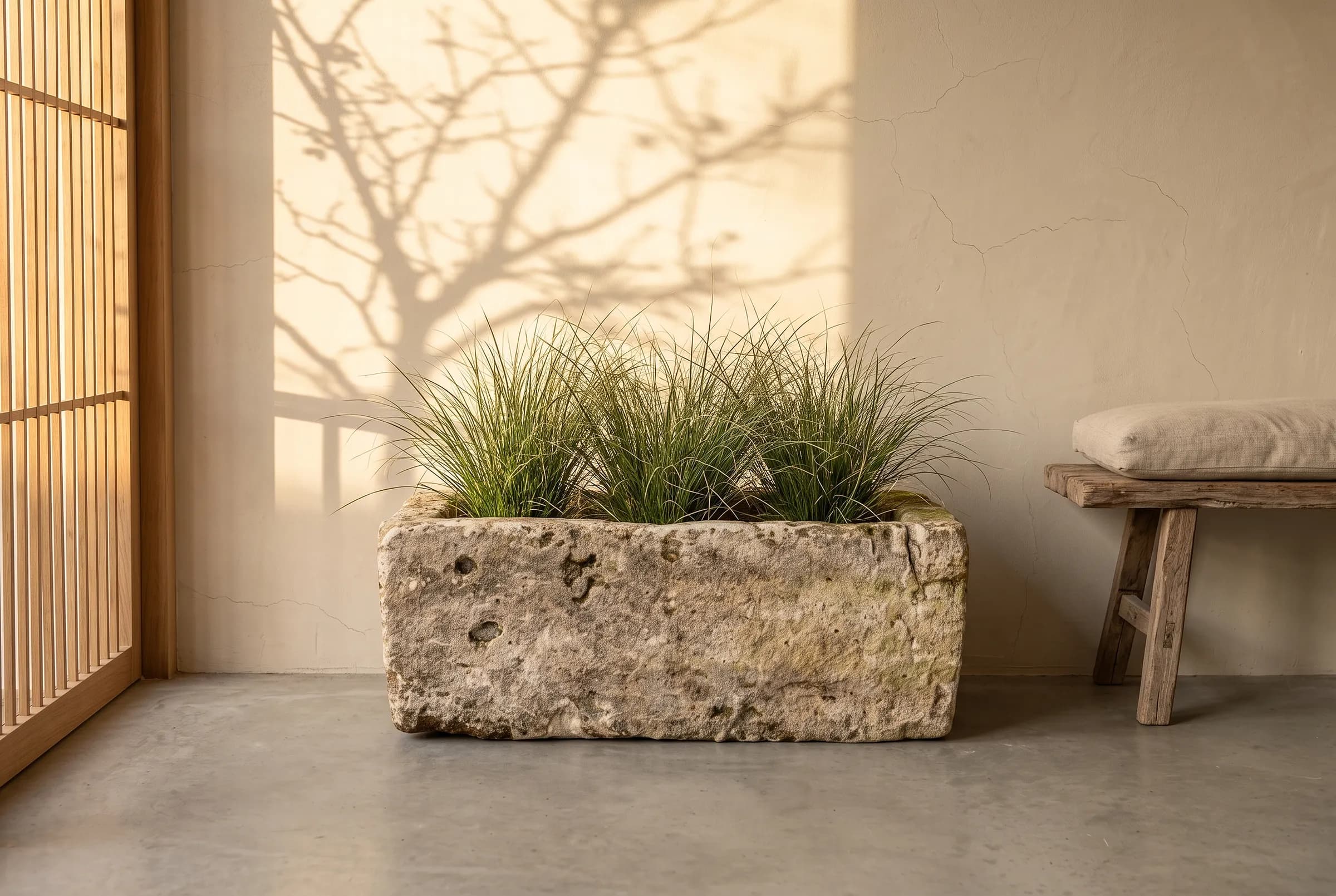
A natural stone trough is a square or rectangular container, carved by hand from a single block of limestone. Where a round pot looks soft and organic, a trough brings line and calm to your garden or interior. You can use it as a planter, as a water trough or turn it into a fountain. Below you can read how to choose the right trough, where to place it and how to enjoy it for years.
What is a natural stone trough?
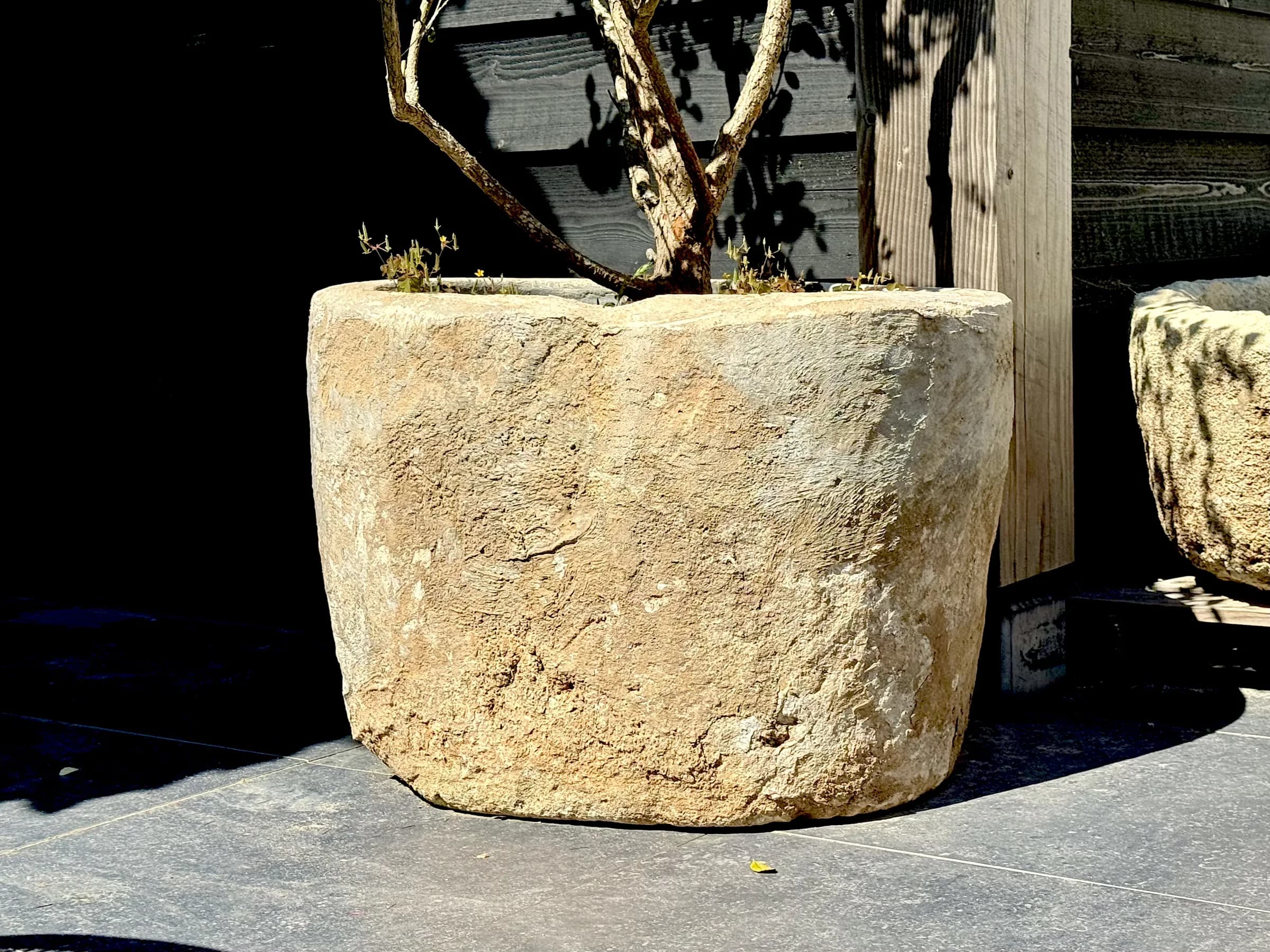
Montung's troughs come from Indonesia, from the island of Java. Local craftsmen carved them by hand from limestone, often decades ago. After that they stood outdoors for years. You can see it: a rough relief, worn edges, patches of moss and a patina no factory can copy. No two troughs are the same, so the trough you see online is exactly the trough you get.
You may know it as a stone planter, stone basin, limestone trough or garden trough. It is always the same thing: a solid, open container of natural stone with thick walls.
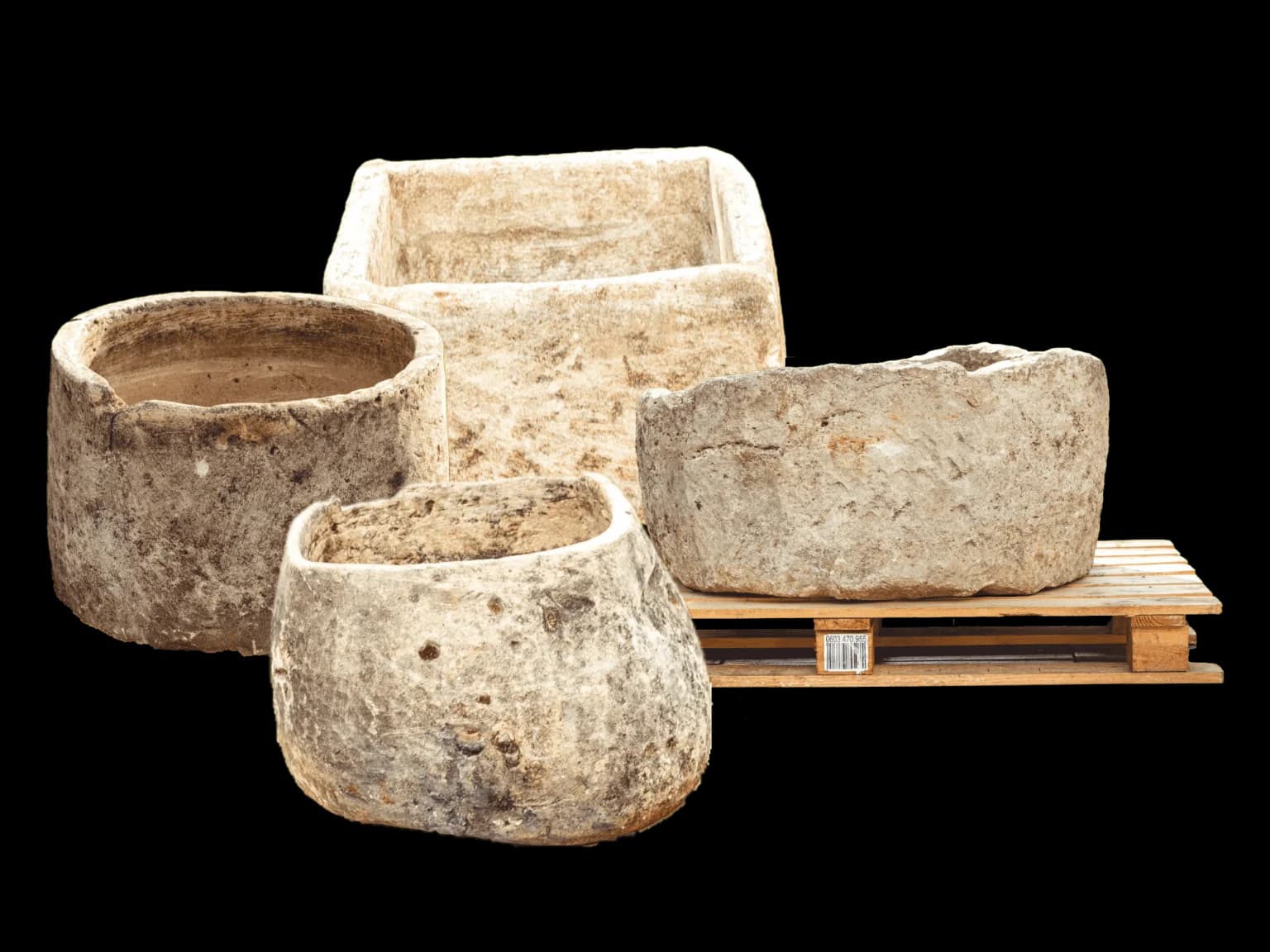
Square or rectangular: what goes where?
- A long trough works well along a wall, fence or the edge of a terrace. Its shape follows the lines of your garden.
- An almost square, block shaped trough is a centrepiece in its own right. Place it next to the front door, where paths meet or in the middle of a gravel area.
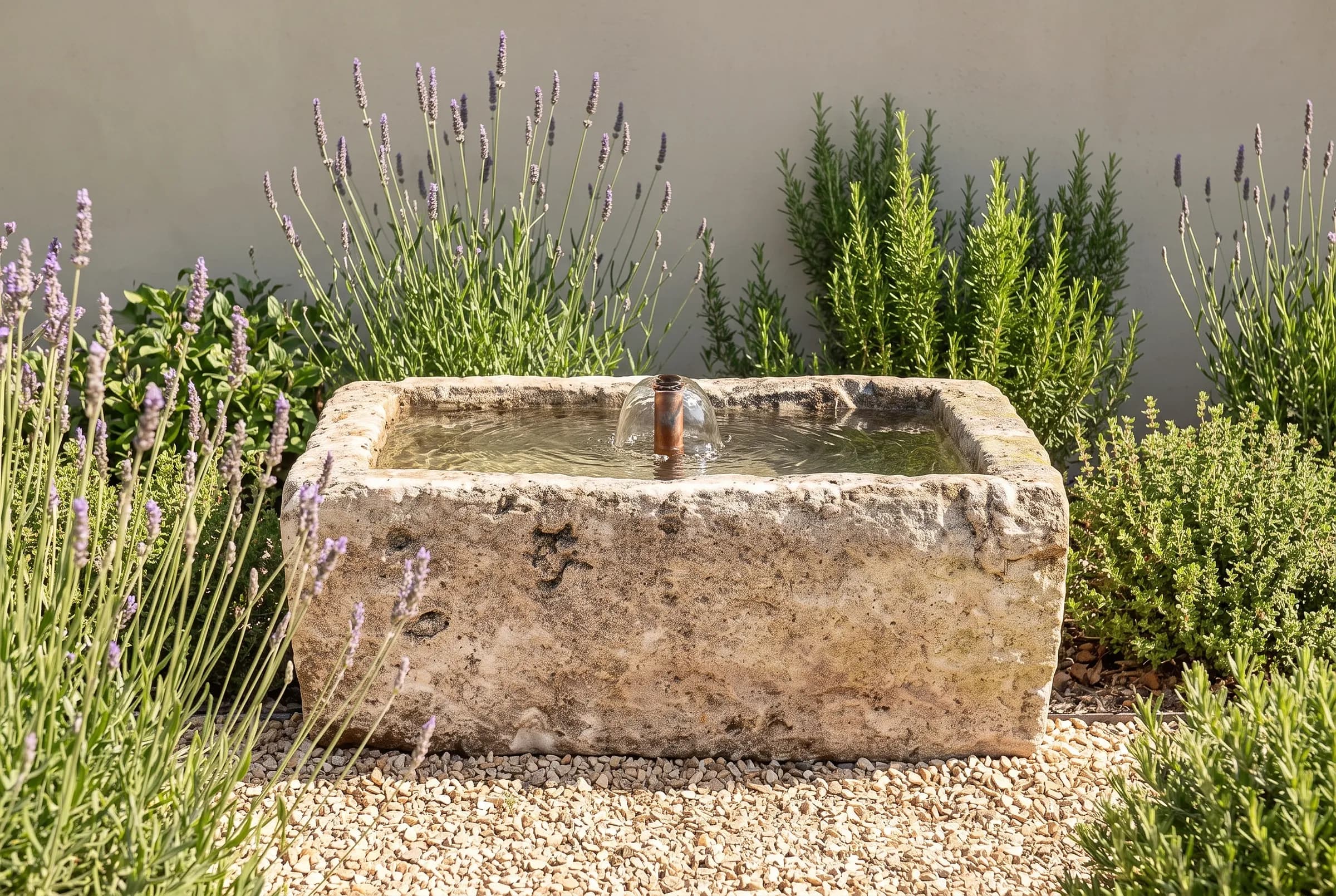
- A low, wide trough is ideal as a water trough or fountain, because you see a lot of water surface.
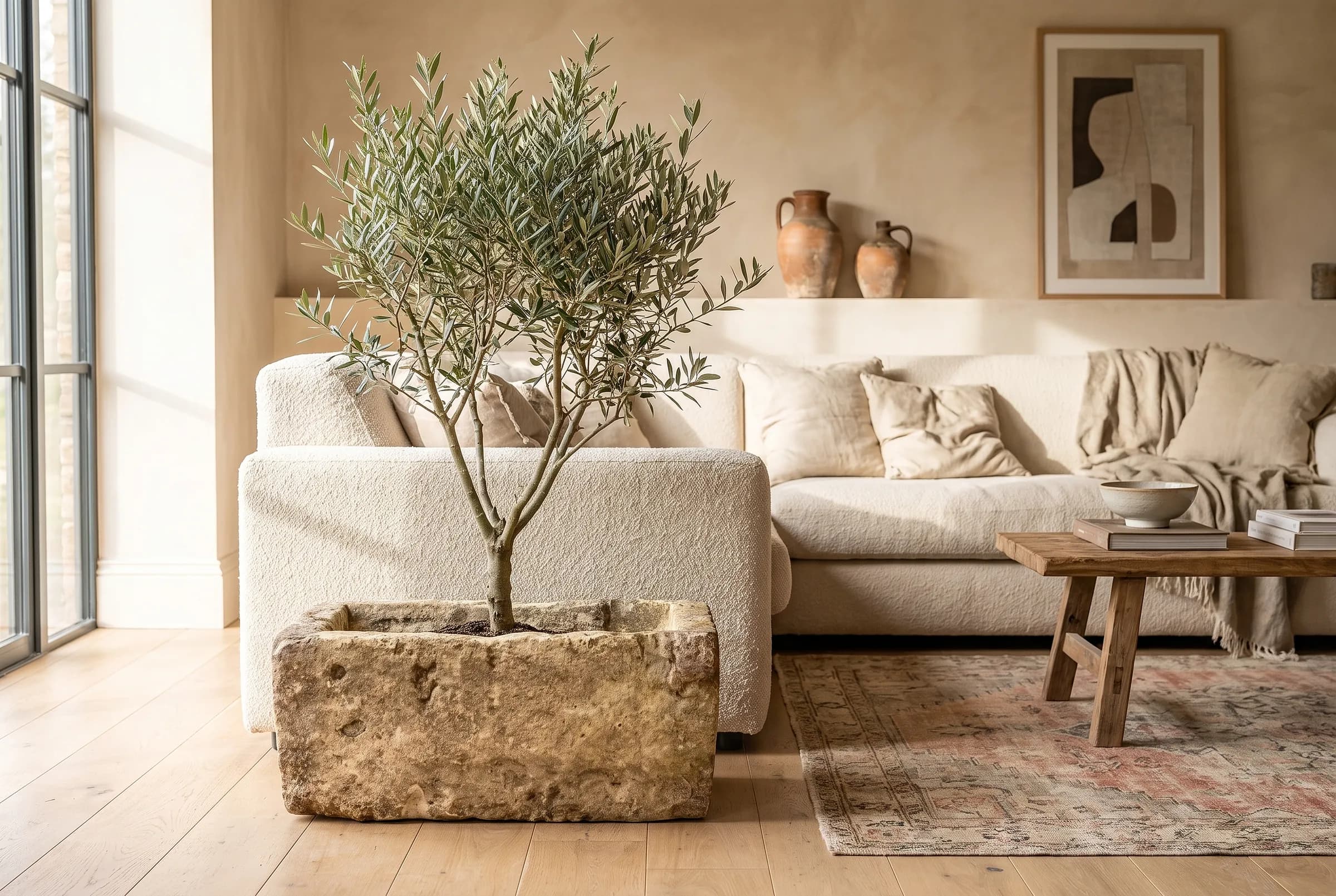
- A tall trough with thick walls has room for soil and roots, for example for a small olive tree or a Japanese maple.
What size trough do you need?
The troughs in our collection are roughly 50 to 100 cm long, 40 to 75 cm wide and 25 to 45 cm high. The exact dimensions are listed with every trough. Because it is natural stone, they can differ by a few centimetres.
- Choose bigger than your first instinct. Outdoors, between trees and borders, a trough quickly looks smaller than you expect.
- For a small tree, choose a tall trough with as much soil as possible. For herbs, succulents and ground cover a low trough is enough.
- Mark out the dimensions on the spot with sticks or tape. You will see straight away whether the proportions are right.
How heavy is a stone trough?
Heavy. The troughs in our collection weigh roughly 30 to 180 kilos, depending on their size and wall thickness. That is also why they stand so firmly: a trough will not blow over and does not need fixing. It does mean you choose the spot in advance. We deliver the troughs ourselves and place them exactly where you want them. You can also collect in Zuidoostbeemster, free of charge.
Planting a trough
A trough makes a beautiful planter, indoors and out. Put a layer of clay pebbles or gravel at the bottom for drainage and fill up with potting soil. Some troughs already have a natural drainage hole, for others we can add one on request. Outdoors we recommend that hole, so rainwater can drain away.
Good combinations are a small olive tree or Japanese maple as a centrepiece, ornamental grasses for movement, lavender and rosemary for a Mediterranean feel, or low greenery such as sedum and thyme in a shallow trough.
From trough to fountain
Almost every trough can be turned into a calm garden fountain. Limestone is naturally porous, so the inside first gets a transparent stone coating. Then a small pump and a spout go in. You can do it yourself with our step by step guide, or we make it fully water ready for 195 euros. Read more about natural stone fountains.
Indoors or outdoors?
Both. Outdoors a trough gives structure to a gravel garden, terrace or border. Indoors it works as a sculpture: an empty trough in a bright room, or a trough with a small tree next to the sofa. When planting indoors, use a watertight inner container so no moisture reaches your floor. Find more ideas in our styling tips for indoors and outdoors.
Care and winter
A trough needs hardly any care. Moss, lichen and discolouration are part of the stone. If you want it lighter, brush it with water and some mild green soap. Never use hydrochloric acid, bleach or a pressure washer up close, as they damage limestone.
In winter, put the trough on pot feet or tiles so water can drain away. Frost damage almost always comes from soaked stone in freezing weather. During long periods of rain and frost, cover it with a jute sack or coir mat, never with plastic. Empty a water trough or fountain completely before winter. More tips in winter ready: how to protect your stone pot from frost.
Troughs available now
Every trough is unique, so once it is gone, it is gone. These are a few troughs you can buy right now. See all troughs in the collection.
Frequently asked questions
What is the difference between a trough and a pot?
A trough is square or rectangular and usually wider than it is tall, a pot is round or bulbous. A trough gives line and calm, a pot looks softer. At Montung both are handmade from limestone from Java.
Are natural stone troughs frost resistant?
Our limestone troughs have stood outdoors for decades and cope well with the Dutch climate. In winter, put them on pot feet so water can drain, and cover them with jute during long periods of rain and frost, never with plastic.
Can I use a trough as a water trough or pond?
Yes. Limestone is porous, so first give the inside a transparent stone coating or pond paint. After that the trough holds water and you can also turn it into a fountain.
How do I get such a heavy trough into my garden?
We deliver the troughs ourselves and place them exactly where you want them. You can also collect in Zuidoostbeemster, free of charge.
Can I see the troughs in person first?
Yes. Visit us by appointment in Zuidoostbeemster, in the municipality of Purmerend, from Monday to Saturday. Online you see a selection, in the Beemster there is more.
Want to drop by?
The troughs are in Zuidoostbeemster, about 20 minutes from Amsterdam and Hoorn and 5 minutes from Purmerend. You are welcome by appointment, Monday to Saturday. Make an appointment via WhatsApp or call +31 6 42 00 00 68.